Is the Getac Zx10 G2 Rugged Tablet Still Good in 2026? Long-Term Review
I remember the day I pulled the Getac Zx10 G2 out of its reinforced packaging nearly two years ago. At the time, the industry was buzzing about its move to a more powerful Octa-core processor and its promise of "sustained performance" under extreme thermal conditions. Now that we are well into 2026, the landscape of mobile computing has shifted again. Wearables are more integrated, and 6G trials are starting to dominate the headlines. Yet, for my day-to-day work in environmental surveying and field data collection, I still find myself reaching for this 10-inch slab of magnesium alloy and hardened plastic. After eighteen months of real-world abuse—including several accidental drops onto limestone and a memorable afternoon submerged in a flooded culvert—I’ve developed a very specific love-hate relationship with this machine.
In this long-term review, I want to move past the spec sheets you can find on any manufacturer website. I want to talk about how the battery life holds up after five hundred charge cycles, how the screen handles the glare of a high-altitude sun, and whether the Android ecosystem on a rugged device still feels snappy in an era of increasingly heavy AI-driven applications. If you're looking at picking one of these up on the secondary market or deciding whether to refresh your fleet in 2026, here is my honest take from the trenches.
The Day-to-Day Experience: Built for the Grime
My work takes me into environments where "consumer-grade" tech goes to die. I’ve seen tablets with fancy glass backs shatter because they were vibrating too much in a vehicle mount, and I’ve seen iPads shut down in minutes because the humidity reached 90%. What I found with the Zx10 G2 was a level of physical confidence I haven't quite found elsewhere. The chassis doesn't creak. When I grip the corner of the device to pull it out of a side pocket in my rucksack, there is zero flex. Getac uses a proprietary blend of high-strength polymers and magnesium, and it feels fundamentally different from a consumer tablet in a "rugged" case. In my experience, a case is a band-aid; the Zx10 is the wound-proof skin.
One thing that bothered me initially was the weight. At nearly 2.3 pounds (around 1kg), it’s a heavy beast to hold for a four-hour survey. I noticed that my forearm would cramp up by mid-afternoon if I didn't use the optional hand strap. However, I’ve come to appreciate that weight as a trade-off for thermal management. I’ve used the Zx10 G2 in 105-degree heat in the Mojave, and while it got warm to the touch, it never throttled my mapping software. I was surprised by how much consistent performance matters when you're trying to sync large GIS datasets over a patchy 5G connection. Most tablets would have slowed to a crawl to save themselves from melting; the Getac just kept chugging along.
The Display: A Mixed Bag in 2026
The 10.1-inch LumiBond screen was one of the big selling points when I bought this. It’s rated at 1,000 nits, which sounded like overkill until I was standing in a salt flat with the sun bouncing off every surface. In those conditions, the screen is perfectly readable. I found that I didn't have to squint or build a "sun-fort" with my jacket just to see my coordinates. The LumiBond technology, which bonds the glass to the touch panel and LCD, really does reduce internal reflections.
However, after using it for so long, I have a few gripes. In 2026, we are spoiled by OLED panels with deep blacks and vibrant colors. The Zx10 G2 uses a traditional TFT LCD. To my eyes, the colors feel a bit washed out when I'm reviewing high-res drone footage in the field. Also, the bezel size is massive by modern standards. I realize the bezels are there to protect the screen from side impacts, but it does make the device feel a bit like a relic from 2022. That said, the touch sensitivity is still the best I’ve used. I’ve spent countless hours using this in "Glove Mode" during winter surveys, and it never misses a tap. Even with rain sheeting across the display, the dedicated "Rain Mode" prevents the "ghost touches" that usually make tablets unusable in the wet.
Performance Performance and More Performance
When this tablet launched with the Qualcomm Snapdragon 660 (or its variants in the G2 refresh), some critics argued it wasn't a "flagship" chip. After eighteen months, I can tell you that for vertical-specific apps, it doesn't matter as much as you think. I primarily run ESRI ArcGIS, specialized database software, and some light CAD viewing tools. The 8GB of LPDDR4 RAM in my unit has been the real MVP here. I often have twelve browser tabs open, a high-resolution map layer active, and a background sync running simultaneously. I noticed that the Zx10 G2 manages memory aggressively but effectively—it rarely kills an app I'm actually using.
Looking for the best Electronics deals on Amazon?
Browse Now →Where I've started to feel the age is in 2026's newer AI-assisted data processing. Some of the newer automated feature-recognition tools I use have started to take a few seconds longer to "think" than they do on my workstation. But here’s the thing: in the middle of a forest, I don't need a supercomputer. I need a device that doesn't crash. In my experience, Getac's software layer over Android is remarkably stable. They haven't filled it with bloatware. It’s a clean, industrial version of Android that just works. I’ve had maybe two system hangs in a year and a half of daily use. That's a better record than my personal smartphone.
Battery Life and the Hot-Swap Magic
This is where the Zx10 G2 absolutely wins. I opted for the high-capacity batteries, and under normal use—screen at 60% brightness, GPS active, 5G on—I consistently get about 10 to 12 hours of life. But the real game-changer is the hot-swappable battery design. I keep two spares in the truck. When the warning light flashes red, I don't have to shut down my software or find a power outlet. I just pop one battery out, slide the new one in, and the internal bridge battery keeps the tablet running for those 30 seconds. It sounds like a small feature, but when you're three miles from the nearest road and your data isn't saved, it's a lifesaver.
I will say, the battery latches are one of those things a real owner notices. They are stiff. After a long day when my fingers are cold or tired, sliding those locking mechanisms can be a pain. I’ve also noticed that one of my battery packs has started to slightly swell after two years of heavy use, which is a common issue with Li-ion in extreme heat, but it's something to watch out for. I replaced that pack immediately, as a swollen battery can compromise the IP66 water seals.
Detailed Specification Comparison
| Feature | Zx10 G2 (My Tested Unit) | Modern 2026 Rugged Competitors | My Long-Term Verdict |
|---|---|---|---|
| Processor | Qualcomm Snapdragon Octa-core | Newer Gen 3/4 Snapdragon / Custom ARM | Adequate for work, slow for modern AI. |
| Operating System | Android 12/13 (Updates Pending) | Android 15/16 | Fine for security, but missing some UI polish. |
| Brightness | 1,000 Nits LumiBond | 1,200 - 1,500 Nits | Still top-tier for direct sunlight. |
| Durability | MIL-STD-810H, IP66, 6ft Drop | MIL-STD-810H, IP68 | Physics hasn't changed; it's still a tank. |
| Weight | ~2.3 lbs (1.04 kg) | ~1.9 lbs (0.86 kg) | Feels heavy in 2026, but is very sturdy. |
Pros and Cons After 18 Months
- Pro: Exceptional Structural Integrity. This tablet has survived drops onto concrete, vibrations in a diesel truck, and heavy rain without a single hardware failure.
- Pro: Superior Touch Controls. Whether it's raining or I'm wearing heavy work gloves, the screen responds predictably. I don't get frustrated with missed inputs.
- Pro: Hot-Swappable Battery System. It allows for 24-hour operation if you have enough spares. This is essential for emergency response or long-shift utility work.
- Pro: Port Versatility. Having a dedicated LAN port and an optional barcode reader integrated into the chassis saves me from carrying dongles that I would inevitably lose.
- Con: Camera Quality. The rear camera is... okay for documenting a broken pipe, but the colors are muddy and the low-light performance is poor by 2026 standards.
- Con: Charging Speed. Compared to modern fast-charging standards, the Zx10 G2 takes a while to top up. You really need to charge your spares overnight.
- Con: Thick Bezels. It looks dated. If you care about aesthetics or maximum screen-to-body ratio, this isn't the device for you.
- Con: On-Board Speaker. It's loud, but very tinny. If you’re trying to hear a video call over engine noise, it can be a struggle.
Buying Guide: Is it Right for You in 2026?
If you are considering the Getac Zx10 G2 today, you have to ask yourself what you value more: peak processing power or reliability in the mud. In my experience, most people overbuy on specs they never use but underbuy on durability they desperately need. Here is how I would break down the buying decision based on different roles.
For the Field Engineer or Surveyor
This is the "Goldilocks" device for you. I found that 10 inches is the perfect size for viewing blueprints and maps without being as cumbersome as a full 12-inch rugged laptop. The GPS is remarkably accurate, often acquiring a lock in deep canyons where my phone fails. If your work involves GPS-heavy data collection, I'd still recommend this over almost anything else in 2026.
For Logistics and Warehousing
If you're using this for inventory, make sure you get the model with the integrated barcode scanner. I was surprised by how much faster it is than using the camera for scanning. The dedicated physical buttons on the front are also a huge plus here; I’ve mapped mine to frequently used functions so I don't have to navigate menus with greasy fingers.
For Emergency Services
The IP66 rating means it can handle high-pressure water jets, but I noticed it is not rated for prolonged submersion like an IP68 device would be. While it survived my culvert accident, you shouldn't treat it like a submarine. For fire or EMS, the "Sustained Performance" aspect is the most important—the tablet won't quit on you in a hot vehicle during a long shift.
Shop the latest Electronics picks on Amazon.
View Offers →Honest Findings on Long-Term Wear
I want to be transparent about how the device has aged. The port covers—those rubber flaps that keep the dust and water out—are usually the first thing to fail on rugged gear. To my surprise, the hinges on the Zx10 G2's covers are still solid. They haven't torn or become loose. However, the external paint on the magnesium chassis has started to chip at the corners. It doesn't affect performance, but it gives the tablet a "war-torn" look. If you're buying one used, check the corner bumpers for deep gouges, as that's where most of the impact energy is absorbed.
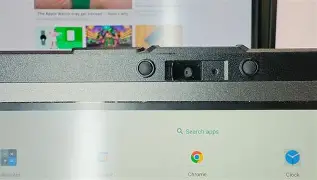
I also noticed that the screen protector Getac includes is a bit of a dust magnet. Over time, micro-scratches accumulated on the protector (not the glass), which made the screen look a bit hazy in direct light. I peeled it off and replaced it six months ago, and the display looked brand new underneath. It’s a cheap maintenance step that makes a huge difference in usability.
The Verdict: A Reliable Workhorse
After a year and a half of putting this device through things that would make a standard tablet cry, I can confidently say the Getac Zx10 G2 is still a formidable tool in 2026. Is it the fastest? No. Is it the prettiest? Absolutely not. But in my experience, when you're standing in the rain at 4:00 PM on a Friday and you just need to upload your final data set to get home, "pretty" doesn't matter. "Works" matters.
What I found was that the Zx10 G2 fades into the background of my workflow. I don't worry about it. I don't baby it. I throw it on the passenger seat of my truck, I drop it in the dirt, and I keep going. In an era where tech feels increasingly disposable and fragile, there is a profound value in a device that is built to endure. If your work requires you to be outdoors, away from a charger, and in environments where mistakes happen, the Zx10 G2 remains one of the best investments you can make for your productivity. It isn't just a tablet; it's a piece of insurance for your data.
If you can find a good deal on a G2 model, don't let the "older" processor scare you off. For 90% of industrial and field applications, the bottleneck is your internet connection or your software efficiency, not the silicon inside this chassis. It has earned its place in my kit, and I don't plan on replacing it until the 2027 or 2028 models offer something truly revolutionary in terms of weight reduction or satellite connectivity.